China Top 10 Wheel Alignment Equipment Manufacturers
China’s wheel-service industry has changed quickly, moving from basic garage tools toward connected, camera-based Wheel Alignment Equipment. This article introduces ten notable Chinese manufacturers serving workshops, tire centers, vehicle dealers, and export markets. Their products may include four-wheel aligners, turntables, lifting systems, calibration targets, and diagnostic software.
Lee Hunter, founder of Hunter Engineering, expressed a useful service principle: “Precision begins before the vehicle enters the bay.” That idea remains relevant. A reliable alignment result depends on sensor accuracy, vehicle data, technician training, workshop flooring, and regular calibration. The machine alone cannot solve every problem.
This guide compares manufacturers through practical criteria. These include product design, measurement repeatability, software coverage, after-sales support, certifications, production capacity, and international distribution. It also considers how clearly each supplier publishes technical information. That matters because attractive brochures can hide limited testing evidence.
No ranking is perfect. Public information is sometimes incomplete, and factory claims require careful verification. Buyers should request calibration records, sample reports, warranty terms, installation guidance, and references from comparable workshops. A low purchase price may become expensive when software updates, replacement cameras, or technician training are excluded.
The selected companies represent different strengths. Some focus on affordable workshop solutions. Others emphasize automation, heavy-duty service, or export customization. Readers should still inspect each supplier directly. The best Wheel Alignment Equipment is not always the most advanced model. It should match vehicle volume, technician ability, floor conditions, and long-term maintenance expectations. Accuracy matters. Practical support matters more.
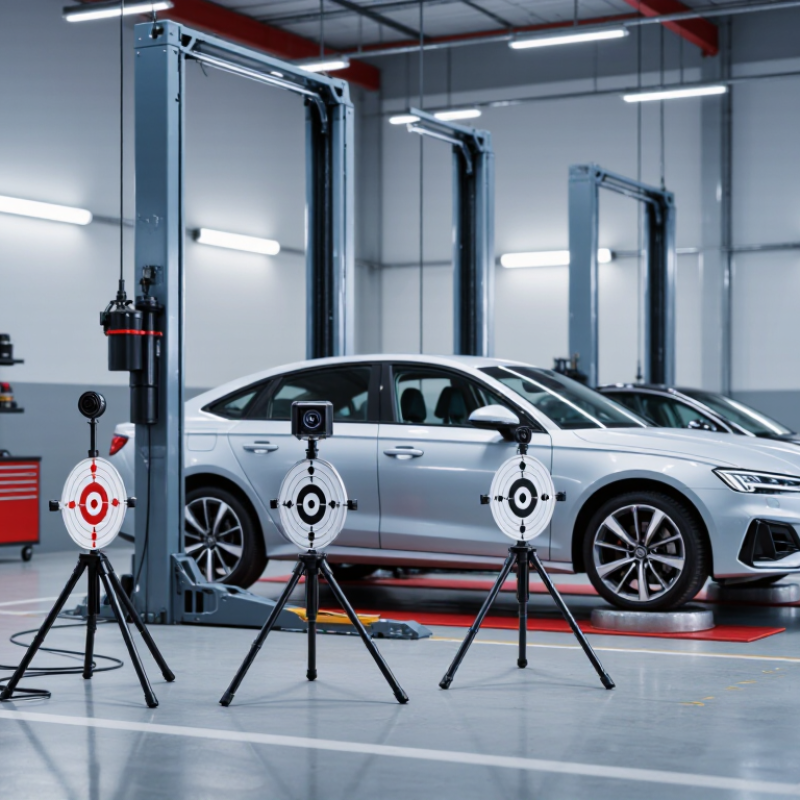
Definition and Scope of Wheel Alignment Equipment Manufacturing in China
China’s wheel alignment equipment manufacturing covers the design, production, calibration, and testing of systems that measure vehicle geometry. These systems commonly assess toe, camber, caster, thrust angle, and steering-center position. Main products include camera-based aligners, sensor heads, wheel clamps, turnplates, lifts, measurement targets, and control software.
The scope also includes key components and technical services. Manufacturers may develop optical sensors, electronic boards, databases, calibration tools, and diagnostic interfaces. However, ordinary tire fitting or alignment workshop services are not manufacturing activities. This distinction matters when assessing China’s top ten manufacturers. A factory assembling imported modules should not receive the same evaluation as one controlling calibration and software development.
Market demand is substantial. The China Association of Automobile Manufacturers reported more than 31 million vehicle sales in 2024.
The Ministry of Public Security also recorded over 450 million motor vehicles nationwide by year-end.
These figures support continuing demand for accurate alignment inspection, especially in repair networks and vehicle inspection facilities. Yet volume alone proves little. A machine can display precise numbers while losing accuracy after a minor impact or poor calibration. This is where experience matters.
Professional evaluation should examine measurement repeatability, calibration intervals, database updates, operator training, and after-sales response. Reports from international automotive equipment researchers often separate hardware revenue from software and service revenue, but those boundaries remain imperfect. Chinese manufacturers should disclose them clearly. Otherwise, comparisons may look precise while remaining incomplete.

Key Criteria for Evaluating China’s Leading Manufacturers
China’s leading wheel alignment equipment manufacturers should be evaluated through evidence, not catalog claims. The China Association of Automobile Manufacturers reported 30.09 million vehicle sales in 2023. This creates strong demand for accurate, durable workshop equipment. The International Energy Agency also recorded more than 14 million electric-car sales worldwide in 2023. Heavier battery vehicles make alignment accuracy and platform stability increasingly important.
A reliable manufacturer should provide repeatability data, calibration records, and test procedures. Ask how the system handles clamp runout, uneven workshop floors, and damaged targets. ISO/IEC 17025 traceability is a useful quality reference for calibration laboratories.
Software matters too. Check update frequency, vehicle database coverage, multilingual operation, and protection against measurement errors. Factory audits should examine sensor assembly, final testing, spare-parts storage, and technician training. A long warranty is helpful, but response time is more practical. No supplier is perfect. Even impressive equipment may perform poorly when installation training is weak.
Tips: Request a live demonstration with the same vehicle types used in your workshop. Compare three consecutive readings, not one attractive result. Review the written warranty and calibration process carefully. Industry forecasts often differ because market definitions vary, so treat market-size figures as guidance rather than proof of product quality. A modest supplier with transparent testing may be safer than a larger supplier with vague claims.
Top 10 China-Based Wheel Alignment Equipment Manufacturers
China-based wheel alignment equipment manufacturers serve repair shops, vehicle plants, tire centers, and mobile service teams worldwide. A credible top-ten list should examine more than export volume. It should assess sensor accuracy, cabinet durability, software updates, calibration procedures, and after-sales training. Factory experience matters here.
Leading manufacturers commonly offer 3D, CCD, and wireless alignment systems. Some focus on compact units for small workshops. Others build heavy-duty platforms for commercial vehicles and high daily workloads. Useful details include turntable capacity, measuring range, compensation speed, and database coverage. A practical test should compare readings after repeated vehicle checks, not after one demonstration.
Reliability also depends on service. Buyers should request calibration records, spare-parts policies, installation guidance, and response times. A manufacturer may have advanced hardware but weak technical support. That gap becomes expensive. Independent distributors and workshop technicians can provide valuable field evidence, although their opinions may differ.
Ranking the top ten is not permanent. New software can improve an older platform, while supply changes may affect delivery quality. Product brochures are helpful, but they are not proof. Trial installation, documented accuracy, and clear warranty terms deserve greater weight. Careful buyers should inspect both the machine and the people supporting it.
Product Categories, Technologies, and Industry Applications
China Top 10 Wheel Alignment Equipment Manufacturers
Wheel alignment equipment now spans several product categories. These include two-post systems, four-post platforms, scissor lifts, portable turnplates, and mobile alignment units. CCD sensors remain practical for busy workshops. Three-dimensional camera systems offer faster measurements and clearer visual reports. Laser tools still serve smaller garages with limited budgets.
According to the International Organization of Motor Vehicle Manufacturers, global vehicle production exceeded 93 million units in 2023. That installed vehicle base supports continuing demand for inspection and maintenance equipment. Grand View Research also valued the global automotive repair and maintenance services market at over 800 billion dollars in 2023. Market estimates differ between reports, so buyers should check the research method and regional coverage.
Modern manufacturers increasingly combine high-resolution cameras, automatic target recognition, cloud reports, and database-based adjustment data. Passenger vehicles need precise toe and camber checks after suspension work. Commercial fleets require durable turnplates, repeatable readings, and quick technician training. Electric vehicles add weight distribution challenges, even when alignment principles remain familiar.
A workshop floor reveals the real test. Dust gathers near sensors. Uneven concrete changes lift readings. Software updates can interrupt service. These details are often missed in product brochures. Manufacturers with strong calibration support, documented accuracy tests, and responsive technical service usually provide greater long-term value. The cheapest system may not remain cheap.
| No. | Manufacturer Profile | Primary Product Categories | Core Alignment Technology | Key Measurement Features | Typical Vehicle Coverage | Main Industry Applications | Typical Workshop Positioning |
|---|---|---|---|---|---|---|---|
| 01 | Manufacturer Profile 01 | 3D wheel aligners Turntables Alignment lifts | Camera-based 3D target measurement with CCD-assisted configurations | Toe, camber, caster, thrust angle, steering-axis inclination, and set-back measurement | Passenger cars, SUVs, and light commercial vehicles | Independent repair workshops, tire centers, and dealership service bays | Full-service alignment lane with automated measurement and digital reporting |
| 02 | Manufacturer Profile 02 | CCD aligners Wheel clamps Compensators | Infrared CCD sensor technology with electronic compensation | Four-wheel alignment, rolling compensation, live data display, and steering-center verification | Passenger cars and light trucks | General automotive repair, tire replacement, and chassis maintenance | Cost-effective equipment for high-volume routine alignment work |
| 03 | Manufacturer Profile 03 | Heavy-duty aligners Mobile systems Turntables | Multi-sensor electronic measurement designed for extended wheelbases | Axle-line measurement, toe, camber, thrust angle, and vehicle-centerline analysis | Trucks, buses, trailers, and commercial vehicles | Fleet maintenance facilities, truck service centers, and logistics depots | Heavy-vehicle service with emphasis on durability and wide track capability |
| 04 | Manufacturer Profile 04 | Portable aligners Wireless sensors Mobile cabinets | Wireless CCD or camera measurement with battery-powered sensor heads | Quick setup, automatic compensation, wireless data transfer, and printable reports | Passenger cars, SUVs, and light commercial vehicles | Mobile service units, small workshops, and multi-bay repair facilities | Flexible equipment for limited floor space and multiple service locations |
| 05 | Manufacturer Profile 05 | 3D aligners Scissor lifts Rolling compensation systems | High-resolution camera imaging using passive or active alignment targets | Fast target recognition, vehicle-specification lookup, before-and-after comparison, and data storage | Passenger vehicles, SUVs, and performance vehicles | Professional tire chains, body repair shops, and premium service centers | Fast throughput with emphasis on repeatable measurement and customer reports |
| 06 | Manufacturer Profile 06 | CCD wheel aligners Four-post lifts Alignment accessories | Electronic CCD sensing with wired or wireless communication between sensor heads | Toe and camber adjustment guidance, steering wheel positioning, and compensation routines | Passenger cars, light vans, and small commercial vehicles | Independent garages, technical schools, and regional service workshops | Practical equipment package for standard chassis inspection and adjustment |
| 07 | Manufacturer Profile 07 | Alignment lifts 3D systems ADAS-compatible accessories | Camera-based alignment measurement supporting vehicle centerline and wheel-angle analysis | Alignment printouts, steering-angle verification, target positioning support, and database integration | Modern passenger cars, SUVs, and vehicles equipped with electronic driver-assistance systems | Dealerships, collision repair centers, and ADAS service workshops | Integrated chassis and post-repair inspection workflow |
| 08 | Manufacturer Profile 08 | Heavy-duty CCD systems Pit-lane equipment Commercial vehicle turntables | Electronic multi-axle measurement with extended-range sensor communication | Multi-axle toe, camber, thrust-line analysis, axle offset, and trailer alignment support | Trucks, buses, trailers, and articulated vehicles | Commercial vehicle workshops, fleet operators, and transport maintenance centers | Robust equipment for frequent service of large and heavy vehicles |
| 09 | Manufacturer Profile 09 | Entry-level aligners Two-post accessories Basic alignment kits | CCD or digital sensor measurement with simplified operator controls | Essential toe and camber measurements, manual compensation, and basic vehicle data management | Common passenger cars and compact light commercial vehicles | Small garages, tire shops, and developing regional service markets | Compact and economical solution for essential wheel alignment services |
| 10 | Manufacturer Profile 10 | Integrated alignment bays 3D aligners Inspection equipment | Computerized 3D imaging combined with digital inspection and workshop management functions | Automated measurement, repair-order integration, database updates, report archiving, and remote diagnostics | Passenger cars, SUVs, light trucks, and mixed-service fleets | Large tire chains, dealership groups, fleet workshops, and automotive training centers | Digitized alignment workflow with emphasis on productivity and service traceability |
Comparison of Quality, Certification, Support, and Export Capabilities
China Top 10 Wheel Alignment Equipment Manufacturers: Comparison of Quality, Certification, Support, and Export Capabilities
Selecting China’s top ten wheel alignment equipment manufacturers requires more than comparing prices. In workshop trials, repeatability matters most. A reliable machine should hold calibration after repeated rim measurements and show stable readings on uneven floors. ISO 9001 certification supports process control, but it does not prove measurement accuracy. Buyers should request calibration records, test tolerances, and third-party reports. ISO/IEC 17025 calibration evidence is stronger.
Certification is only one layer. The European Commission’s Machinery Regulation framework and CE requirements affect many export markets, while electrical safety and electromagnetic compatibility records deserve close review. The International Energy Agency reported nearly 14 million electric cars sold worldwide in 2023. That shift increases demand for precise alignment on heavier vehicles and low-profile tires. Some suppliers still provide limited EV-specific guidance. That deserves scrutiny.
Support separates capable exporters from catalog sellers. According to ACEA’s Vehicles on European Roads report, the average European car was about 12.5 years old in 2022, sustaining long-term repair demand. Therefore, remote diagnostics, spare-parts availability, software updates, and clear training schedules matter. Export capability should be checked through installation references, packaging tests, language support, and regional service partners. Trade databases can verify shipment history, but shipment volume alone proves little. A large export number may hide weak after-sales coverage. The honest choice is sometimes less spectacular.