Top 10 Types of Stainless Threaded Rod for Global Buyers?
Global buyers need more than a shiny metal rod. They need predictable strength, accurate threads, and dependable delivery. Stainless Threaded Rod supports fastening, suspension, alignment, and equipment assembly across demanding environments. It appears in construction, food processing, marine installations, water systems, and industrial maintenance.
This guide examines ten common types used by international purchasers. The comparison considers stainless grades, thread profiles, surface finishes, lengths, diameters, and manufacturing methods. Austenitic options, such as 304 and 316, often suit different corrosion conditions. Metric and imperial threads also create practical sourcing differences. A rod that fits one market may fail another specification.
Experience shows that corrosion resistance alone does not guarantee a successful purchase. Thread accuracy, straightness, packaging, and traceability matter equally. Buyers should request material certificates, dimensional reports, and relevant test records before approving large orders. Standards such as ASTM, ASME, ISO, or regional specifications may guide the selection. However, standards are not interchangeable by assumption. That mistake can become expensive.
Small details matter. A poorly protected thread may arrive damaged after a long sea shipment. Salt exposure can also change the required grade. Some suppliers offer polished surfaces, while others focus on functional finishes. Neither choice is automatically better. This overview helps buyers compare practical options, identify hidden risks, and ask sharper questions during supplier evaluation. It also acknowledges an uncomfortable point: product descriptions are sometimes incomplete. Verification remains essential. With careful review, global purchasers can select Stainless Threaded Rod that balances performance, compliance, availability, and total cost.
Stainless Threaded Rod Basics: Grades, Threads, Sizes, and Standards
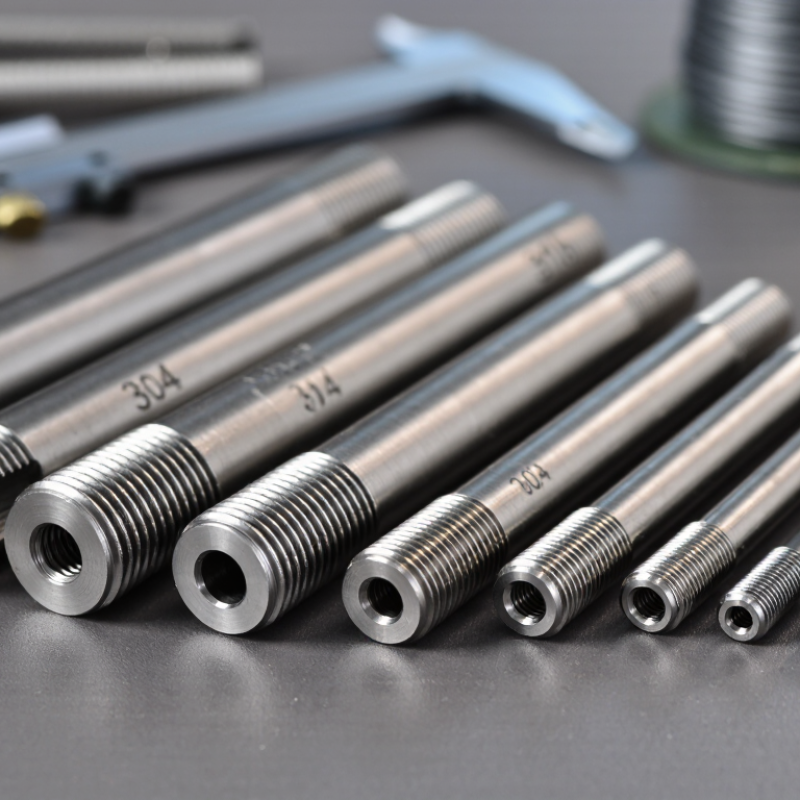
Stainless threaded rod is not one universal product. Its grade, thread form, diameter, and certification determine performance. In purchasing work, I start with the environment: salt spray, chemicals, heat, or indoor dryness. Grade 304 suits many general assemblies. Grade 316 or 316L offers better resistance in marine and chloride-rich areas. Grades 321 and 347 tolerate elevated temperatures more effectively. Grades 410 and 430 may fit specific strength or magnetic requirements. They are not interchangeable with austenitic grades. Check the application twice.
For a broader top-ten comparison, buyers may encounter 304, 304L, 316, 316L, 321, 347, 310, 410, 430, and duplex 2205. Availability varies by diameter and region. Mechanical properties also vary. Do not choose by grade alone. Metric threads commonly follow ISO 68-1 and ISO 965. Unified inch threads usually follow ASME B1.1. Coarse threads assemble faster and resist damage. Fine threads provide more adjustment, but may gall more easily. Lubrication and controlled tightening matter. A dry installation can seize.
Specify nominal diameter, pitch or TPI, cut length, thread class, end condition, and straightness. Common metric diameters range from M6 to M30, while larger rods may require special handling. Inch sizes need both diameter and thread count, such as 1/2-13 UNC. Request dimensional inspection and material test reports. ISO 3506 and ASTM F593 can support fastener selection, but the exact grade and condition must match the order. I have seen catalog descriptions omit thread tolerance. That small omission can delay installation. Confirm gauge fit before shipment.
| No. | Stainless Threaded Rod Type | Typical Stainless Grade | Corrosion and Temperature Profile | Common Thread Systems | Typical Size Range | Relevant Standards | Typical Applications |
|---|---|---|---|---|---|---|---|
| 1 | General-purpose austenitic threaded rod | 304 / 304L | Good general atmospheric and indoor corrosion resistance; 304L is preferred where reduced carbon is useful for welded assemblies. | UNC, UNF, coarse metric, fine metric | M3–M30; approximately 1/8–1 1/4 in | ASTM F593; ASME B1.1 for Unified threads; ISO 965 for metric threads | General fastening, supports, machinery, light structural assemblies, and indoor construction. |
| 2 | Marine and chloride-resistant threaded rod | 316 / 316L | Improved resistance to chlorides and many industrial atmospheres because of molybdenum content; not immune to seawater corrosion. | UNC, UNF, coarse metric, fine metric | M4–M36; approximately 1/4–1 1/2 in | ASTM F593; ASME B1.1; ISO 965 | Marine hardware, coastal construction, chemical equipment, food-processing areas, and exterior fastening. |
| 3 | Low-carbon welded-assembly threaded rod | 316L | Low-carbon version of 316 with good resistance to intergranular corrosion after welding, subject to correct fabrication practice. | UNC, UNF, metric coarse, metric fine | M6–M36; approximately 1/4–1 1/2 in | ASTM F593; ASTM A276 material specification may be referenced for bar stock; ASME B1.1 or ISO 965 | Welded brackets, piping supports, process equipment, architectural assemblies, and sanitary installations. |
| 4 | Heat-resistant austenitic threaded rod | 321 | Titanium-stabilized stainless steel with good resistance to sensitization; suitable for elevated-temperature service within design limits. | UNC, UNF, metric coarse, metric fine | M6–M30; approximately 1/4–1 1/4 in | ASTM A193 Grade B8T may apply to pressure-temperature bolting; ASME B1.1; ISO 965 | Exhaust systems, thermal equipment, high-temperature ducting, and process installations. |
| 5 | Stabilized high-temperature threaded rod | 347 | Niobium-stabilized austenitic stainless steel with good resistance to sensitization during high-temperature exposure. | UNC, UNF, metric coarse, metric fine | M6–M30; approximately 1/4–1 1/4 in | ASTM A193 Grade B8C may apply to pressure-temperature bolting; ASME B1.1; ISO 965 | High-temperature piping, refinery equipment, furnace components, and thermal processing systems. |
| 6 | High-strength precipitation-hardening threaded rod | 17-4 PH / UNS S17400 | Higher strength than common 300-series stainless grades after suitable heat treatment; corrosion resistance depends on condition and environment. | UNC, UNF, metric coarse, metric fine | M6–M30; approximately 1/4–1 1/4 in | ASTM F593 where applicable; ASTM A564 for precipitation-hardening bar material; ASME B1.1; ISO 965 | High-load machinery, aerospace-related hardware, pumps, valves, and structural equipment. |
| 7 | Martensitic high-strength threaded rod | 410 | Can provide high strength and hardness after heat treatment; corrosion resistance is generally below 304 and 316. | UNC, UNF, metric coarse, metric fine | M6–M30; approximately 1/4–1 1/4 in | ASTM F899 may be relevant for stainless steel fastener materials; ASME B1.1; ISO 965 | Wear-prone equipment, brackets, mechanical assemblies, and applications requiring strength and moderate corrosion resistance. |
| 8 | Duplex stainless threaded rod | 2205 / UNS S32205 or S31803 | Higher strength than standard austenitic grades with strong resistance to chloride stress-corrosion cracking; welding and heat treatment require control. | UNC, UNF, metric coarse, metric fine | M8–M36; approximately 3/8–1 1/2 in | ASTM A1082 or applicable duplex fastener specifications; ASTM A479 for certain bar products; ASME B1.1; ISO 965 | Offshore structures, desalination equipment, chemical processing, pressure systems, and chloride-rich environments. |
| 9 | Highly alloyed corrosion-resistant threaded rod | 904L / UNS N08904 | Very high resistance to sulfuric acid and many aggressive environments; mechanical and thread specifications should be confirmed for each order. | UNC, UNF, metric coarse, metric fine | M6–M30; approximately 1/4–1 1/4 in | ASTM B625 or applicable alloy product specifications; ASME B1.1; ISO 965 | Strong-acid service, chemical processing, pollution-control equipment, and specialized industrial installations. |
| 10 | Super-austenitic chloride-resistant threaded rod | 6% molybdenum stainless steel, such as UNS S31254 | Very high pitting and crevice-corrosion resistance in chloride-containing environments; requires careful galling control during installation. | UNC, UNF, metric coarse, metric fine | M6–M30; approximately 1/4–1 1/4 in | ASTM A479 or applicable alloy product specification; ASME B1.1; ISO 965 | Seawater systems, desalination plants, offshore equipment, flue-gas treatment, and severe chemical environments. |