10 Portable Treadmill Buying Tips for Global Buyers
Portable Treadmill buying looks simple until a compact machine reaches a small apartment, a different power system, or a busy commercial market. Global buyers need more than attractive photos and a low listed price. They must examine walking-surface dimensions, motor ratings, folded height, noise levels, incline control, warranty terms, and local electrical compatibility.
Industry evidence supports this careful approach. The American College of Sports Medicine’s Worldwide Survey of Fitness Trends has repeatedly placed wearable technology and home-based exercise among influential fitness developments. Grand View Research also reports continued expansion in the global home fitness equipment market, driven by convenience, limited living space, and flexible training habits. These reports describe market direction, not a guarantee of product quality. That distinction matters.
Exercise physiologist Tom Holland has said, “Walking is the most underrated form of exercise.” A Portable Treadmill can make walking easier to schedule, especially beside a work desk or in a narrow bedroom. However, portability creates compromises. A lighter frame may vibrate more. A shorter belt may feel restrictive during faster walking. A quiet motor may still transmit impact through a wooden floor.
This guide, “10 Portable Treadmill Buying Tips for Global Buyers,” turns those details into practical checks. It considers user height, daily mileage, storage space, after-sales service, import documentation, and regional safety expectations. Some recommendations will not fit every household. That is the point. A perfect buying formula does not exist, and even experienced buyers can overlook voltage, delivery damage, or replacement-part availability. The safest choice is the model that matches real routines, not imagined ones.
Portable Treadmill Types and Their Best Uses
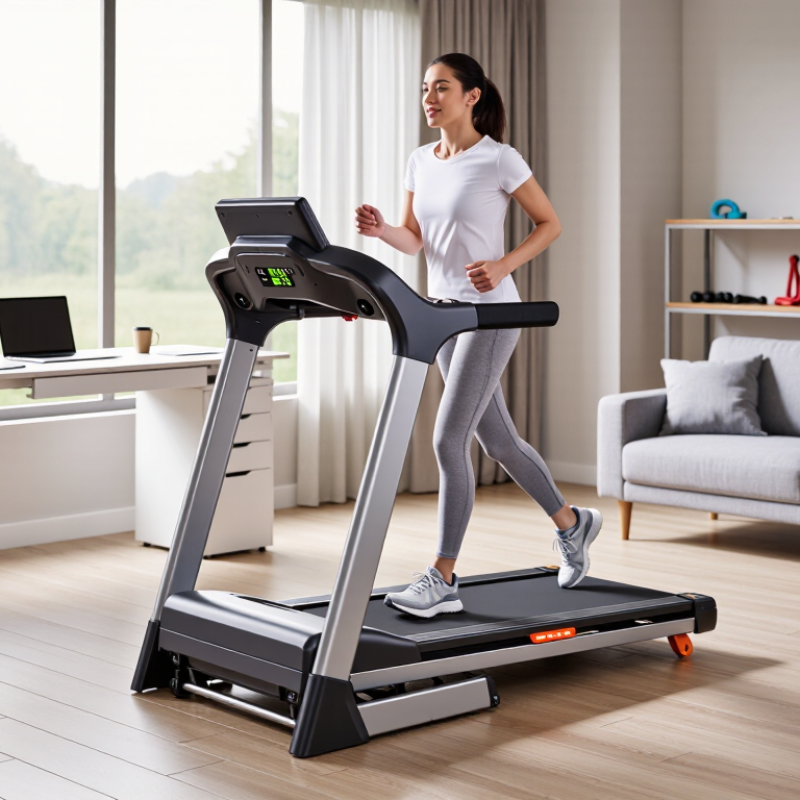
Portable treadmill types suit different spaces, routines, and body weights. A walking pad is the lightest option, often fitting beneath a desk or sofa. It works best for office walking, short indoor sessions, and apartment living. A folding motorized treadmill offers higher speed, handrails, and stronger frames. Choose it for jogging, regular home workouts, or shared family use. Manual curved treadmills need no electrical power, but they are usually heavier and less convenient to move.
The Health & Fitness Association’s 2024 Global Report recorded more than 184 million fitness facility members worldwide in 2023. This growth suggests strong demand for convenient training at home. However, convenience should not replace proper selection. The WHO’s 2022 Global Status Report on Physical Activity estimates that 31% of adults are insufficiently active. A compact treadmill can reduce access barriers, but it cannot guarantee consistent exercise. A quiet walking pad may suit video calls, while a stable folding model is safer for faster walking and light running. I learned this the hard way: small wheels can make a “portable” machine frustrating to move.
Tips: Check the folded dimensions, machine weight, wheel quality, belt width, motor rating, and maximum user weight. Test the walking surface if possible. A narrow belt may feel acceptable for five minutes, then restrictive. For upstairs rooms, measure doorways and consider vibration under the frame. ACSM’s Worldwide Survey of Fitness Trends 2024 also highlights technology-supported exercise, yet app features should remain secondary to stability, noise control, and comfortable daily use.
10 Portable Treadmill Buying Tips for Global Buyers - Portable Treadmill Types and Their Best Uses
| No. | Portable Treadmill Type | Best Use | Typical Speed Range | Typical User Capacity | Typical Running Surface | Incline Expectation | Portability Considerations | Buying Tip for Global Buyers |
|---|---|---|---|---|---|---|---|---|
| 1 | Under-desk walking pad | Walking during desk work, video calls, or light daily activity | Usually up to about 6 km/h (3.7 mph) | Often 90–120 kg (198–265 lb) | Approximately 38–45 cm wide × 90–120 cm long | Usually none | Slim profile, transport wheels, and easy storage under furniture | Confirm whether the stated speed is walking-only and check desk clearance before purchase. |
| 2 | Folding walking treadmill | Home walking, compact apartments, and occasional low-impact exercise | About 1–8 km/h (0.6–5 mph) | Often 100–120 kg (220–265 lb) | Approximately 40–46 cm wide × 100–125 cm long | Manual or no incline is common | Folding deck reduces storage length but adds hinges and locking parts | Inspect the folded dimensions, locking mechanism, and storage height, not only the product length. |
| 3 | Compact treadmill with handrail | Walking and light jogging with additional balance support | About 1–10 km/h (0.6–6.2 mph) | Commonly 100–130 kg (220–287 lb) | Approximately 40–46 cm wide × 105–125 cm long | Often fixed flat or limited manual incline | Handrails improve control but increase assembled size and weight | Choose a handrail height and width that allow a natural stride without blocking nearby furniture. |
| 4 | Light-jogging portable treadmill | Short jogging sessions and moderate home cardio | About 1–12 km/h (0.6–7.5 mph) | Commonly 100–130 kg (220–287 lb) | Approximately 42–48 cm wide × 115–130 cm long | Manual incline or no incline is typical | Usually heavier than walking pads and needs more clearance around the deck | Prioritize deck length, shock absorption, motor duty rating, and emergency-stop access. |
| 5 | Portable treadmill with manual incline | Walking workouts with added intensity without an electronic incline motor | About 1–10 km/h (0.6–6.2 mph) | Often 100–120 kg (220–265 lb) | Approximately 40–46 cm wide × 100–125 cm long | Typically two or three manually selected levels | Less electronic complexity, but the deck may be harder to move when raised | Check the actual incline percentage and whether the incline can be adjusted safely while unloaded. |
| 6 | Portable treadmill with electronic incline | Structured home workouts, hill simulation, and interval training | About 1–12 km/h (0.6–7.5 mph) | Commonly 100–130 kg (220–287 lb) | Approximately 42–48 cm wide × 115–135 cm long | Often approximately 0–10%; specifications vary considerably | More functions usually mean greater weight, noise, and maintenance needs | Verify the incline range, adjustment speed, power requirements, and compatibility with the local electrical system. |
| 7 | Rehabilitation-oriented walking treadmill | Controlled, low-speed walking under professional or clinical guidance | Often about 0.3–6 km/h (0.2–3.7 mph) | Frequently 100–150 kg (220–331 lb) | Usually wider, approximately 45–55 cm × 110–140 cm | Usually flat | Safety rails, low start speed, and gradual acceleration may reduce portability | Look for accessible controls, a large stop button, stable rails, and suitability confirmed by a qualified professional. |
| 8 | Curved manual treadmill | Self-powered interval training and athletic conditioning | User-controlled; commonly used for walking, jogging, and sprinting | Often 120–160 kg (265–353 lb) | Typically about 45–50 cm wide × 140–160 cm long | Curved deck provides the running contour; no powered incline is required | Usually heavier and less compact than folding electric models | Confirm shipping weight, floor protection, wheel design, and whether the user is comfortable with self-powered resistance. |
| 9 | Travel-friendly mini treadmill | Occasional use in guest rooms, small offices, or temporary accommodation | Usually up to about 6–8 km/h (3.7–5 mph) | Often 90–110 kg (198–243 lb) | Approximately 36–42 cm wide × 90–115 cm long | Usually none | Lower weight and compact dimensions may come with a shorter deck and lower user capacity | Compare the net weight with airline or courier limits and verify the included power adapter. |
| 10 | Commercial-style compact treadmill | Frequent use in serviced apartments, residential gyms, and shared fitness rooms | About 1–16 km/h (0.6–10 mph) | Commonly 120–150 kg (265–331 lb) | Approximately 45–52 cm wide × 125–145 cm long | Electronic incline may range from approximately 0–12% | Durable construction improves stability but substantially increases shipping and installation requirements | Check duty cycle, warranty support, service access, spare parts availability, and local safety certification. |