Top Carbon Steel Pipe Manufacturers for Global Buyers
Global buyers need more than a long supplier list when selecting a Carbon Steel Pipe Manufacturer. They need evidence, consistency, and practical supply experience. Carbon steel pipes support water systems, construction, energy projects, and industrial transport. Their performance depends on chemistry, wall thickness, welding quality, testing, and storage conditions.
The World Steel Association’s October 2024 Short Range Outlook projected global steel demand at about 1.77 billion tonnes in 2024. It also expected demand to rise in 2025. This broader trend supports continued pipe consumption, but it does not guarantee supplier quality. Market volume can hide uneven manufacturing practices. Buyer judgment still matters.
Lakshmi Mittal, Executive Chairman of ArcelorMittal, has described steel as “the backbone of the modern world.” That statement reflects steel’s practical importance, especially where pipes carry water, fuel, gas, or process materials. However, a strong reputation alone is insufficient. A reliable Carbon Steel Pipe Manufacturer should provide mill test certificates, heat-number traceability, dimensional inspection records, and clear compliance with standards such as API 5L, ASTM A106, or EN 10216.
This guide examines leading manufacturers serving global buyers. It compares production capability, product range, export experience, certification practices, delivery reliability, and technical support. Site audits and customer references can reveal details that brochures miss. A polished website proves little.
No ranking is perfect. Regional strengths, project specifications, freight costs, and changing regulations can alter the best choice. Buyers should confirm every critical claim before signing a purchase agreement. That extra check may prevent costly delays, rejected batches, and unsafe installation decisions.
Carbon Steel Pipe Manufacturing: Materials, Processes, and Quality Standards
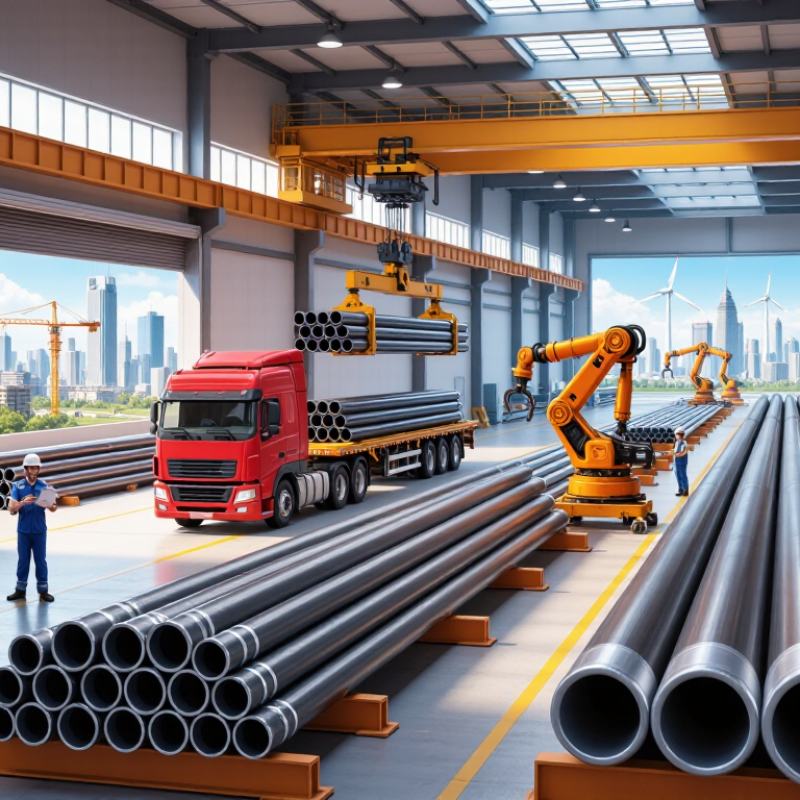
Carbon steel pipe manufacturing starts with controlled raw materials. Common grades use iron, carbon, and small amounts of manganese or silicon. Chemical balance affects strength, weldability, and corrosion resistance. Buyers should request heat numbers and material test reports. These records connect each pipe to its original steel batch.
Manufacturers form pipes through seamless or welded processes. Seamless pipes begin as heated billets, then pass through piercing and rolling stages. Welded pipes use steel plate or coil, shaped and joined along a controlled seam. Heat treatment can improve toughness and reduce internal stress. Each production stage needs accurate temperature, pressure, and dimensional control. No process is flawless. Minor ovality or surface marks may still appear, so inspection must be practical and consistent. Quality checks often include hydrostatic testing, ultrasonic examination, chemical analysis, and visual inspection. Requirements may reference ASTM, API, or ISO standards, depending on the application and destination.
Tips: Ask for the full specification before ordering. Confirm outside diameter, wall thickness, length, end finish, coating, and test requirements. Check whether certificates are independently verified. A factory may pass a strength test but miss packaging details. That small issue can cause damage during ocean transport. Keep communication written and precise. Clear records protect both sides when requirements change.
Top Carbon Steel Pipe Manufacturers for Global Buyers - Carbon Steel Pipe Manufacturing: Materials, Processes, and Quality Standards
| Evaluation Dimension | Manufacturing or Product Category | Typical Materials and Specifications | Common Applications | Relevant Standards and Quality Requirements |
|---|---|---|---|---|
| Seamless carbon steel pipe | Hot-finished or cold-drawn pipe manufactured from a solid round billet without a welded seam. | Common grades include ASTM A106 Grade B, ASTM A53 Grade B, and API 5L Grades B and X42–X65. | High-temperature service, steam lines, process piping, pressure vessels, oil and gas gathering systems. | Dimensional tolerances, hydrostatic testing, tensile testing, bend testing, chemical analysis, and visual inspection. |
| Electric resistance welded pipe | Steel strip is formed into a circular shape and welded along the longitudinal seam using electrical resistance or induction heat. | ASTM A53 Grades A and B, ASTM A135, ASTM A178, and selected API 5L grades. | Water transmission, low-pressure gas service, structural supports, fire-protection systems, and general industrial piping. | Weld-seam inspection, hydrostatic testing, flattening tests, tensile tests, and dimensional verification. |
| Longitudinal submerged arc welded pipe | Heavy steel plate is formed and welded longitudinally under a layer of granular flux. | API 5L Grades X42–X70 and equivalent line-pipe grades; wall thickness commonly exceeds standard ERW ranges. | Large-diameter transmission pipelines, water infrastructure, piling, and low-temperature service where specified. | Ultrasonic or radiographic weld examination, hydrostatic testing, Charpy impact testing when required, and weld procedure qualification. |
| Spiral submerged arc welded pipe | Coil or strip is helically formed and welded along a spiral seam using submerged arc welding. | API 5L Grades B, X42, X52, and X60; carbon steel plate or coil selected according to service requirements. | Large-diameter water pipelines, slurry lines, piling, irrigation, and selected oil and gas applications. | Seam inspection, hydrostatic testing, dimensional control, coating inspection, and traceability of plate or coil heat numbers. |
| Structural carbon steel pipe | Seamless or welded hollow sections produced for load-bearing and fabrication purposes. | ASTM A500 structural tubing Grades B and C; circular, square, and rectangular hollow sections may be available. | Building columns, trusses, bridges, machinery frames, towers, and general steel fabrication. | Yield strength, tensile strength, elongation, wall-thickness tolerance, straightness, and corner or surface condition. |
| Mechanical tubing | Cold-drawn, hot-finished, or welded tubing manufactured for controlled dimensions and surface quality. | ASTM A519 carbon and alloy steel mechanical tubing; grades depend on strength, machinability, and forming needs. | Automotive components, hydraulic cylinders, rollers, shafts, machinery, and precision fabrication. | Outside diameter and wall tolerances, hardness, tensile properties, surface finish, and non-destructive examination when specified. |
| Oil and gas line pipe | Seamless or welded pipe engineered for transmission and gathering systems. | API 5L product specifications with grades such as B, X42, X52, X60, and X65; PSL 1 or PSL 2 requirements may apply. | Crude oil, natural gas, refined products, water injection, and multiphase pipeline systems. | Chemical limits, tensile and yield strength, weld qualification, hydrostatic testing, fracture toughness, and NDT according to the ordered PSL level. |
| Boiler and heat-exchanger tube | Seamless carbon steel tube manufactured for elevated-temperature heat transfer and pressure service. | ASTM A179 for cold-drawn low-carbon steel heat-exchanger tubes and ASTM A192 for high-pressure boiler tubes. | Boilers, condensers, heat exchangers, refinery equipment, and power-generation systems. | Hydrostatic or non-destructive electric testing, hardness, flaring, flattening, tensile testing, and surface inspection. |
| Pressure-service pipe | Pipe manufactured for internal pressure with controlled chemistry, strength, and dimensional performance. | ASTM A53, ASTM A106, and ASTM A333 grades selected according to pressure, temperature, and impact requirements. | Compressed air, steam, water, chemical process lines, and low-temperature pressure service. | Hydrostatic testing, impact testing for specified low-temperature grades, dimensional checks, and material certificates. |
| Typical manufacturing materials | Carbon steel produced from billets, slabs, plates, or hot-rolled and cold-rolled coils. | Carbon content is controlled to balance strength, weldability, toughness, and forming performance; manganese and silicon are commonly used alloying elements. | Material selection depends on operating pressure, temperature, corrosion environment, fabrication method, and design code. | Heat analysis, product analysis, grade-specific chemical limits, mechanical properties, and full heat-number traceability. |
| Common pipe-end configurations | Plain ends, beveled ends, threaded ends, grooved ends, or special machined ends. | End preparation is selected according to welding, threading, coupling, flange, or mechanical-connection requirements. | Pipeline construction, pressure piping, fire-protection systems, structural assembly, and maintenance projects. | End squareness, bevel angle, root face, thread dimensions, groove geometry, and visual acceptance criteria. |
| Corrosion protection options | Uncoated, externally painted, galvanized, fusion-bonded epoxy coated, or internally lined pipe. | Protection system is selected according to soil, water, atmospheric, chemical, temperature, and abrasion exposure. | Buried pipelines, marine projects, potable water, fire-water systems, and outdoor industrial installations. | Surface preparation, coating thickness, adhesion, holiday detection, visual inspection, and repair documentation. |
| Core quality-control tests | Inspection program combining chemical, mechanical, dimensional, hydrostatic, and non-destructive examinations. | Tensile, yield, elongation, hardness, flattening, bending, flaring, hydrostatic, ultrasonic, eddy-current, or radiographic testing as applicable. | Ensures suitability for pressure, structural, temperature, fatigue, and fabrication requirements. | Inspection and Test Plan, calibrated equipment, qualified personnel, acceptance criteria, and documented test results. |
| Documents global buyers should request | Commercial and technical documentation supporting material identity and product conformity. | Mill test certificate, certificate of conformity, packing list, dimensional report, NDT report, hydrostatic test record, and coating report when applicable. | Import clearance, project approval, third-party inspection, installation records, and long-term traceability. | Documents should identify specification, grade, size, wall thickness, heat number, test results, inspection status, and applicable revision. |
| Key purchasing criteria | Technical compliance, manufacturing capability, production capacity, inspection resources, and export experience. | Confirm nominal pipe size, schedule or wall thickness, length, grade, end finish, coating, quantity, tolerance, and delivery condition. | Reduces risks related to incorrect sizing, incompatible materials, delayed delivery, installation problems, and rejected documentation. | Use a project-specific purchase specification and verify compliance with ASTM, ASME, API, ISO, EN, or other required standards. |