How to Choose the Right Wheels for Global Sourcing in 2026?
Choosing the right wheels for global sourcing in 2026 requires more than comparing unit prices. Material, fitment, certification, production capacity, and logistics must be evaluated together. The International Energy Agency’s Global EV Outlook 2025 reported more than 17 million electric cars sold worldwide in 2024. Electric vehicles increase demand for lighter wheels, stronger designs, and tighter dimensional control. However, lighter is not automatically better. A poorly tested wheel can create warranty costs, delivery delays, and safety concerns.
Material selection deserves careful attention. World Steel Association data recorded approximately 1.89 billion tonnes of crude steel production in 2023. The International Aluminium Institute reported global primary aluminium production above 70 million tonnes during the same period. These figures show the scale of available materials, not guaranteed supplier quality. Buyers should verify alloy specifications, heat treatment, fatigue performance, coating durability, and traceability. Ask for independent laboratory reports. Inspect production samples, not only polished catalog images.
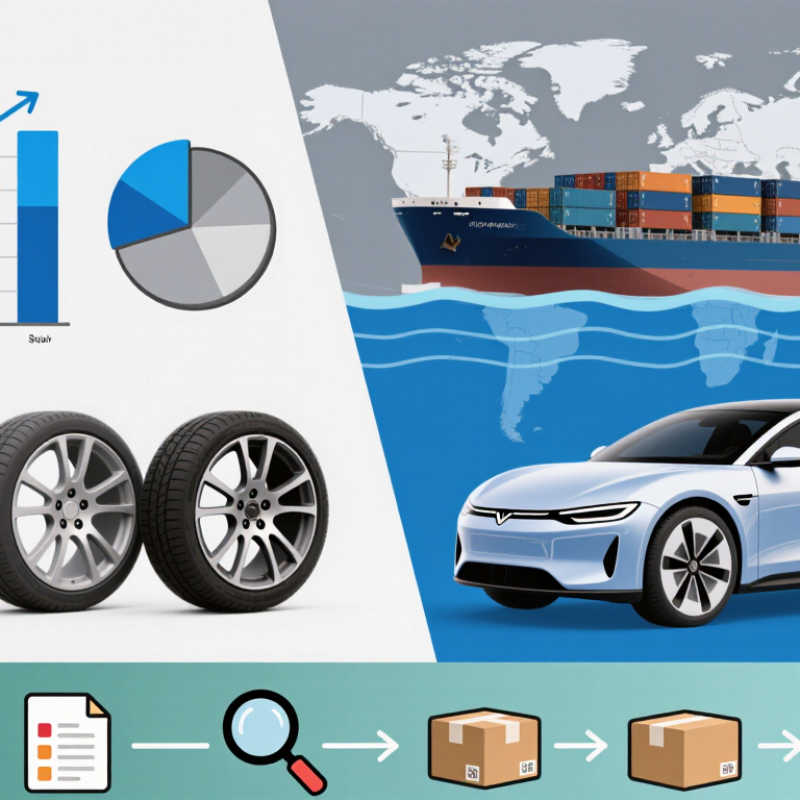
Global transportation adds another layer of risk. UN Trade and Development states that over 80% of world merchandise trade moves by sea. A port disruption can therefore affect wheels, tires, packaging, and replacement parts at once. Incoterms, container planning, and backup suppliers matter. So does local inspection. In practice, a factory may meet drawings but miss packaging details that cause scratched surfaces after a long voyage. No single checklist solves everything. Sourcing teams should compare total landed cost, technical evidence, supplier experience, and realistic lead times. Some assumptions will still fail. That is why a small pilot order and documented corrective process remain valuable in 2026.
Define Load, Speed and Floors Under ISO 22883:2004’s 4 km/h Scope
Choosing wheels for global sourcing starts with a clear operating definition. ISO 22883:2004 addresses manually propelled equipment within a 4 km/h speed scope. That limit matters. A wheel rated for warehouse pushing may not suit powered towing or higher-speed movement.
Record the real load, not only the cart’s empty weight. Include goods, shelves, impact loads, and uneven distribution. ISO testing uses defined loads and conditions, but actual service can be harsher. The U.S. Bureau of Labor Statistics reported 888,220 nonfatal workplace injuries involving days away from work in 2023. Poorly selected wheels can increase pushing effort and handling risk. Small details matter.
Floor selection deserves equal attention. Smooth concrete, epoxy coatings, tile joints, ramps, metal plates, and debris create different rolling resistance. Measure thresholds and floor gaps in millimeters. Then compare wheel diameter, tread hardness, bearing design, and swivel resistance. The Liberty Mutual Workplace Safety Index estimated $12.4 billion in 2022 costs from overexertion involving outside sources. That figure is not a wheel specification, but it is a useful warning.
Do not treat a catalog load rating as universal. It may reflect ideal static conditions. Recheck performance at 4 km/h, with the intended floor and real pushing direction. Some assumptions will be wrong. That is why pilot testing across two floor types remains practical before approving a global purchase.
Verify Durability Through EN 12527 Testing and ASTM F1957 Impact Criteria
Global wheel sourcing should begin with test evidence, not attractive samples. EN 12527 provides test methods and apparatus for evaluating castors and wheels under controlled conditions. Ask the supplier for the exact standard edition and laboratory report.
Check the details carefully. The report should identify wheel diameter, tread material, axle design, applied load, test surface, speed, temperature, and test duration. A wheel that rolls smoothly on polished concrete may behave differently on a dusty warehouse floor. Measure wear, cracking, deformation, and noise after testing. Small changes matter.
For impact performance, compare the wheel’s intended use with the applicable ASTM F1957 impact criteria. Do not accept a certificate with vague wording. Request the test setup, impact energy, sample quantity, failure definition, and photographs of damaged areas. The current edition also needs confirmation. More testing is not always better. Incorrect fixtures can produce confident but useless results.
In practical sourcing work, I would test production samples, not only pre-production pieces. Batch variation can appear in hardness and bonding. Keep samples from different manufacturing dates. Record every result. A clean report is not proof of complete reliability. It may only describe one wheel, one load, and one controlled moment. That limitation deserves attention.
How to Choose the Right Wheels for Global Sourcing in 2026?
Verify the correct test scope before approving wheel durability claims.
EN 12527 is a test-method standard for castors and wheels and is directly relevant to evaluating wheel performance. ASTM F1957 addresses impact attenuation of athletic playing surfaces, not wheel durability or wheel impact resistance. Use ASTM F1957 only when the floor or sports-surface performance is part of the sourcing requirement; it should not replace wheel-specific testing under EN 12527.
Scope references: EN 12527, “Castors and wheels — Test methods and apparatus”; ASTM F1957, “Standard Test Method for Field Measurement of Surface Impact Attenuation of Athletic Field Playing Systems.”
Audit Suppliers Against ISO 9001, REACH, RoHS and Incoterms 2020
How to Choose the Right Wheels for Global Sourcing in 2026?
Supplier approval should begin with evidence, not polished samples. The ISO Survey 2022 recorded more than 1.2 million ISO 9001 certificates worldwide, yet certification alone does not guarantee consistent wheel quality.
Check the certificate scope, production address, expiry date, and audit history. Request batch records for steel, aluminum, rubber, and coatings. Confirm that inspection plans cover load capacity, hardness, dimensions, corrosion resistance, and packaging damage. A useful audit follows one wheel backward, from carton label to raw-material lot. Small gaps matter.
REACH and RoHS checks need material-level proof. Ask for current declarations, laboratory reports, and supplier controls for restricted substances.
ECHA’s 2023 enforcement project found non-compliance in 18% of inspected products, showing why declarations deserve verification. Test high-risk parts, such as painted brackets, plastic hubs, and plated fasteners.
Do not accept an old report without checking formulation changes. That mistake is common. Under Incoterms 2020, write the named place precisely and assign export clearance, freight, insurance, unloading, and import duties in the purchase contract.
The ICC rules clarify delivery responsibilities, but they do not replace quality agreements or regulatory checks.
I would also run a pilot shipment before full volume. It may reveal carton collapse, unclear documents, or unexpected destination costs.
Procurement teams often focus too heavily on unit price. That is an expensive blind spot.