
How to Choose the Best Excavator Tracks?

Choosing the right Excavator Tracks is more technical than matching size and price. Tracks influence ground pressure, traction, vibration, fuel use, and undercarriage wear. A compact excavator working on wet clay needs a different solution from a 30-ton machine clearing broken rock. The working surface matters.

Industry reports show why this decision deserves attention. Grand View Research identifies construction equipment demand as closely linked to infrastructure investment, urban development, and replacement cycles. Its construction equipment market analysis also highlights the growing role of compact machinery in restricted work areas. Fortune Business Insights reports continued expansion in the global excavator market, driven by construction, mining, and municipal projects. These reports describe market direction, not a guarantee for every job.

Real-world selection still depends on evidence from the machine and site. Check the manufacturer’s operating weight, track width, sprocket profile, roller condition, and recommended tension. Measure the old track before ordering. A few millimeters can create expensive installation problems. Rubber tracks usually protect paved surfaces and reduce noise, while steel tracks can provide stronger resistance against sharp debris. However, rubber is not automatically the better choice.

Look closely at the tread pattern. Block-style treads can improve stability on firm ground. Bar-style designs may clean mud more effectively. Soil, travel distance, turning frequency, and daily load all affect service life. The European Construction Equipment Committee and ISO 16727 provide useful technical context for machinery terminology and testing, but neither replaces the excavator manufacturer’s specifications.

No choice is perfect. Some guides oversimplify it. The best decision balances traction, durability, surface protection, downtime risk, and total operating cost. Record the machine model, site conditions, and failure history before buying. That evidence makes the choice more reliable.
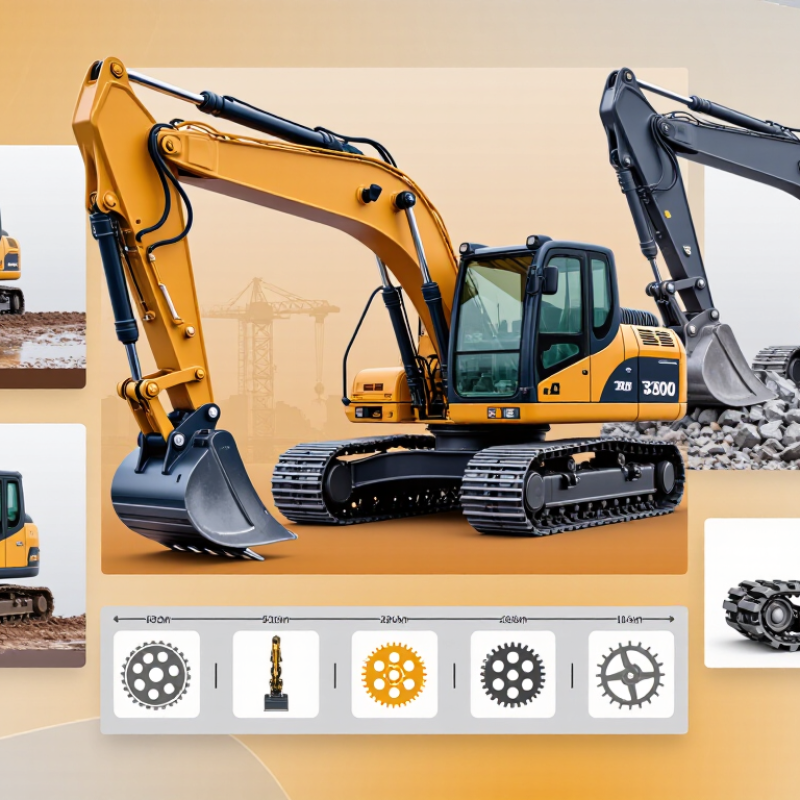
How to Choose the Best Excavator Tracks?

Define Excavator Weight, Power, and Manufacturer Track Specifications

Choosing the best excavator tracks starts with three numbers: operating weight, engine power, and track specifications. Operating weight includes the machine, standard bucket, fluids, and the rated operator load. It is not the shipping weight.

Weight controls ground pressure and undercarriage stress. A 20-ton excavator needs tracks designed for its actual working mass, not a nearby model class. The 2024 Off-Highway Research outlook identifies hydraulic excavators as one of the largest global construction equipment segments. That scale creates many replacement options, but compatibility still depends on exact measurements. Check pitch, link count, shoe width, sprocket profile, and bolt spacing. One wrong dimension can cause rapid wear.

Power matters differently. Higher engine power does not automatically require a wider track. Hydraulic output, digging duty, soil conditions, and travel frequency matter more. ISO 6015 defines operating mass measurement for hydraulic excavators, while ISO 14396 provides a framework for engine power data. Compare both figures consistently. A machine working on wet clay may need wider shoes for flotation. Rocky demolition work may need stronger links and reinforced shoes instead.

Measure twice. I have seen usable-looking tracks fail because the pitch was recorded incorrectly. Track life also depends on tension, cleaning, and operator habits. The calculation is useful, but it is not perfect. Manufacturer track specifications remain the final checkpoint before ordering.


How to Choose the Best Excavator Tracks?

Define the excavator’s operating weight, engine power, and undercarriage requirements before selecting replacement tracks. The chart below shows representative industry ranges for common excavator classes.

How to use this chart: Match the machine’s operating weight and power class with a compatible track width, pitch, link count, and sprocket design. Narrower shoes generally reduce ground disturbance, while wider shoes can improve flotation on soft ground. Always verify the final dimensions against the excavator manufacturer’s undercarriage specification.

Data shown are representative engineering ranges rather than specifications from any individual company or brand. Actual values vary by configuration, attachments, counterweight, and operating conditions.

Compare Rubber, Steel, and Hybrid Tracks for Different Work Environments

How to Choose the Best Excavator Tracks?

Rubber, steel, and hybrid tracks behave differently across demanding work environments. Rubber tracks suit finished concrete, paved roads, gardens, and residential projects. They reduce surface damage and operator vibration. They also create less noise near occupied buildings. However, sharp rubble, hot asphalt, and exposed rebar can cut or weaken the rubber compound.

Steel tracks perform better on rocky ground, demolition sites, forests, and abrasive soil. Their metal shoes resist severe impact and usually provide strong climbing traction. They can damage pavement and leave deep marks on soft ground. On sensitive surfaces, use protective mats or choose another track type. Steel tracks also require regular checks for loose hardware, worn pins, and uneven tension.

Hybrid tracks combine steel strength with rubber contact pads or blocks. They can work well on mixed sites, such as road construction that includes gravel and finished pavement. The pads reduce surface damage, while the steel structure supports heavier impacts. Performance still depends on pad design, machine weight, and site debris.

There is no perfect track.

I have seen operators choose tracks by price alone, then replace them early after entering unsuitable terrain. A practical decision starts with the ground, not the catalog. Check daily for cuts, missing pads, packed mud, and abnormal wear. Correct tension matters too. Over-tensioning increases heat and wear, while loose tracks may derail. When conditions change during a project, reassess the track choice instead of forcing one set to handle everything.

Calculate Ground Pressure in kPa from Track Width and Contact Area

How to Choose the Best Excavator Tracks?

Ground pressure helps determine whether an excavator will float, sink, or damage the working surface. Track width matters, but it is only part of the calculation. Measure the actual track length touching the ground. Then use this formula:

contact area equals two tracks multiplied by track width and contact length.

For example, a 20,000-kilogram excavator with two 600-millimeter tracks and three-meter contact lengths has 3.6 square meters of contact area. Convert machine mass into force by multiplying it by 9.81. The result is 196,200 newtons. Divide that force by 3.6 square meters, giving approximately 54.5 kPa of ground pressure.

The details matter.

Use the operating weight, including fuel, attachments, and the expected load. A machine carrying a full bucket produces higher pressure at the front. Uneven ground also changes the real contact area. Track sag, worn components, and mud can reduce effective contact. In field inspections, I would measure the footprint instead of trusting catalog dimensions alone. Soil strength, moisture, and slope should also influence track selection. A wider track usually lowers calculated pressure, but it may increase wear or instability on hard surfaces. The calculation is useful, not perfect. Recheck it under real working conditions.

Verify Track Width, Pitch, Link Count, and Sprocket Compatibility

How to Choose the Best Excavator Tracks?

Verify Track Width, Pitch, Link Count, and Sprocket Compatibility

Choosing excavator tracks starts with accurate measurements, not appearance. Measure the track width across the shoe, preferably after cleaning packed soil. Then check the pitch from one pin center to the next. Measure several links, because worn pins can produce inconsistent readings. Small errors grow.

Count the links around the complete track. Link count affects track length, tension range, and fit around the undercarriage. A replacement with the wrong count may appear close, yet sit too tight or sag badly. Follow the machine service manual when available. Its specifications are more reliable than a faded label.

Sprocket compatibility deserves equal attention. Match the pitch to the sprocket tooth spacing and inspect the tooth profile for hooking or sharp wear. A new track installed on a badly worn sprocket may experience uneven movement and faster damage. I once focused too heavily on width and overlooked sprocket wear; the installation looked correct but performed poorly. That mistake changed my inspection routine.

Check roller condition, idler alignment, and adjuster travel before ordering. These parts can hide the real cause of tracking problems. Compare your measurements with the supplier’s technical drawing, not only a product photograph. Ask for tolerances when dimensions seem uncertain. Fit matters. A careful measurement takes minutes, while correcting an incorrect track can consume a workday.

Estimate Service Life: Rubber Tracks Often Last 1,000–2,000 Hours

Choosing excavator tracks requires more than comparing tread patterns or purchase prices. Service life is a practical starting point. Rubber tracks often last about 1,000–2,000 operating hours under suitable conditions. That range is not a promise. Ground type, load, travel speed, and maintenance can change it sharply. A track working on clean soil may outlast one crossing broken concrete every day.

I recommend recording operating hours and checking the tracks weekly. Look for exposed steel cords, missing tread blocks, sidewall cuts, and uneven wear. Measure tread depth at several points, not only near the sprocket. A machine that turns constantly on abrasive ground may wear one side faster. Keep correct track tension, because over-tightening and excessive slack create problems. Small details matter. Remove packed stones before they harden around the undercarriage. Avoid long, high-speed moves when the job does not require them.

When estimating replacement timing, compare current wear with your work schedule. If cracks are spreading or cords are visible, the calendar matters less than safety and traction. Ask the operator what changed: more road travel, heavier attachments, or frequent counter-rotating turns. These clues often explain a disappointing lifespan. I have seen hour-based estimates fail when site conditions were ignored. That mistake is easy to repeat. A realistic budget should include downtime, labor, and possible damage to sprockets or rollers. Choose track construction and tread patterns for the actual ground, even when the cheaper option looks attractive.

How to Choose the Best Excavator Tracks? — Estimated Service Life of Rubber Tracks

Track Option Typical Service Life Best Operating Surface Main Advantages Common Wear Factors Maintenance Demand Selection Guidance
Standard Rubber Tracks 1,000–2,000 operating hours Soil, grass, sand, landscaping areas, and mixed construction sites Low ground pressure, reduced surface damage, smooth operation, and lower vibration Sharp rocks, reinforced concrete, excessive spinning, incorrect tension, and prolonged exposure to oils Medium A practical choice for general-purpose excavating when the machine works on varied but moderately abrasive ground
Heavy-Duty Rubber Tracks 1,500–2,500 operating hours Frequent construction work, compacted soil, gravel, and moderately abrasive terrain Thicker tread, stronger internal reinforcement, improved resistance to cuts and punctures Rocky ground, sharp debris, aggressive turning, overloading, and poor undercarriage alignment Medium Suitable for contractors who need longer wear life than standard tracks without changing to steel tracks
Steel Tracks 2,000–4,000+ operating hours Rock, demolition, quarry work, broken concrete, and highly abrasive terrain High durability, strong resistance to sharp materials, and better performance in severe ground conditions Corrosion, worn sprockets, loose hardware, excessive road travel, and damage to paved surfaces High Choose when maximum durability is more important than surface protection, ride comfort, and noise reduction
Rubber Pads on Steel Tracks 800–1,800 operating hours for pads Mixed sites requiring both rough-ground capability and occasional paved-surface travel Combines steel-track strength with improved traction, reduced noise, and less surface marking Pad bolts loosening, abrasive materials, uneven wear, and frequent operation on hard pavement High Useful for machines that move between demolition, roadwork, and standard construction areas
Low-Ground-Pressure Rubber Tracks 800–1,500 operating hours Wet soil, turf, soft ground, wetlands, and environmentally sensitive areas Excellent flotation, minimal ground disturbance, and better access on soft terrain Heat, sharp stones, high-load operation, excessive counter-rotation, and contaminated surfaces Medium to High Best when protecting the work surface and maintaining mobility on weak or saturated ground are priorities

Service-life figures are practical industry estimates rather than guaranteed limits. Actual life depends on machine weight, operating technique, undercarriage condition, track tension, ground composition, travel speed, load, temperature, and daily maintenance.

Go to Top