Top Commercial Carpet Cleaner Machine Manufacturers in China
China has become an important sourcing base for commercial cleaning equipment, including machines built for hotels, offices, schools, and contract-cleaning teams. Yet a polished catalog does not tell the whole story. Buyers need to compare cleaning performance, service access, parts availability, and the manufacturer’s ability to support a machine after delivery.
Commercial cleaning equipment consultant Lin Wei captures the practical test this way: “A machine proves its value on Monday morning, when the carpet is dirty and the crew cannot wait.” That is a useful lens for evaluating each commercial carpet cleaner machine in this guide. Look beyond tank size and advertised pressure. Consider how easily an operator can maneuver around chair legs, how much moisture remains in the carpet, and whether routine maintenance requires special tools. Small details matter.
The manufacturers featured here serve different needs and budgets. Some focus on compact extractors for smaller teams; others offer broader product ranges for demanding facilities. Their claims still deserve careful checking. Specifications can vary by model, and sales support may differ by region. Ask for current documentation, a live demonstration, and clear warranty terms before making a decision. No shortlist can replace a site trial. Even a promising machine may feel awkward in a narrow hallway. This overview offers a starting point—not a guarantee—and helps buyers ask more precise questions when comparing China’s commercial carpet cleaner machine manufacturers.
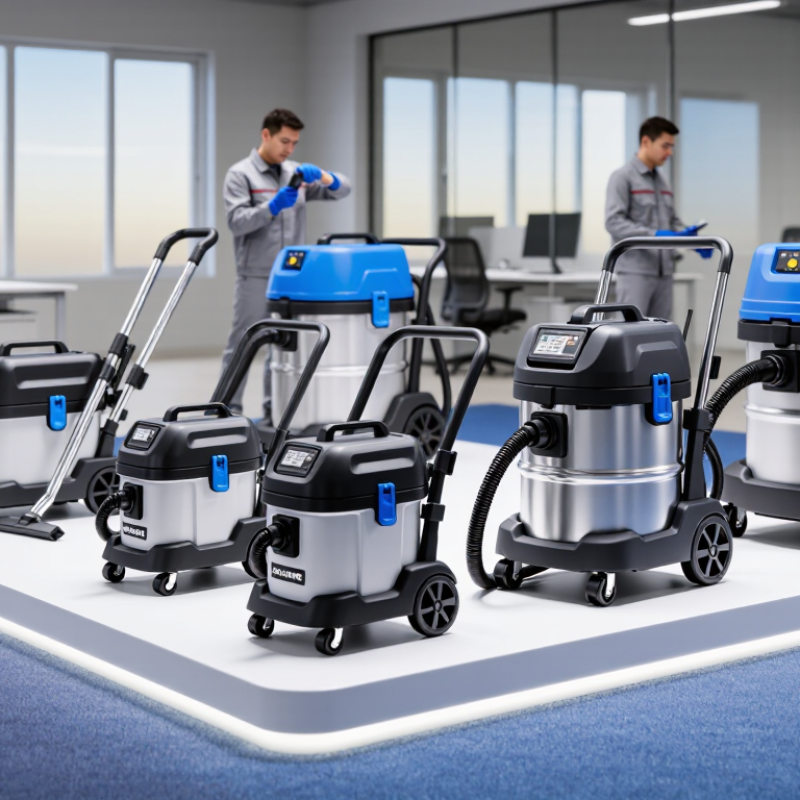
Commercial Carpet Cleaner Machines: Types and Core Functions
Commercial carpet cleaner machines differ mainly in how they release, agitate, and recover cleaning solution. Hot-water extraction machines inject heated water and detergent, then vacuum out soil and moisture. Portable units suit offices with lifts or narrow corridors; truck-mounted systems support larger jobs but need vehicle access. Encapsulation machines apply polymer-based solution that dries around soil for later vacuuming. Low-moisture systems reduce drying time, while rotary bonnet machines scrub surface soil quickly. Dry-compound machines use absorbent media and avoid a wet rinse. Each method has limits. Bonnet cleaning, for example, may leave deeper soil behind.
Core functions include controlled solution flow, brush or pad agitation, strong recovery, and adjustable pressure. Recovery matters: damp carpet can disrupt room use and invite callbacks. The Carpet and Rug Institute’s Seal of Approval testing evaluates cleaning performance, including soil removal and water recovery. Its results offer a useful comparison, though site conditions still matter. The IICRC S100 standard also outlines professional procedures for textile-floor cleaning. The U.S. Bureau of Labor Statistics counted about 2.4 million janitors and building cleaners in 2023, underscoring the scale of daily facility-care work. Data source: BLS Occupational Employment and Wage Statistics, 2023. I would still test a machine on a small carpet section first. Specs can mislead. A quiet motor does not guarantee fast recovery.
China’s Commercial Carpet Cleaner Manufacturing Industry
China’s commercial carpet cleaner manufacturing industry serves hotels, offices, transport facilities, and cleaning contractors. Production often combines metal fabrication, molded plastic housings, pumps, vacuum motors, hoses, and recovery tanks. These parts must work together under repeated daily use. A loose fitting can mean leaks on a busy floor.
Manufacturers typically assess suction, water delivery, brush action, and recovery performance during product development. Quality checks may include electrical safety tests, leak inspections, and repeated operation cycles. Buyers should also examine practical details: tank capacity, cord length, noise, replacement-part access, and how easily operators can drain the machine. Small design choices matter. A heavy recovery tank can slow staff between rooms.
The sector offers a wide range of machine types, from compact spot extractors to larger walk-behind units. Specifications alone do not show how a cleaner performs on dense carpet or in narrow corridors, so trials on representative flooring are useful. Factory capability, documentation, and after-sales support deserve equal attention. One limitation is easy to overlook: test conditions may differ from real sites, where dirty water, rushed shifts, and uneven maintenance change results. A clear service plan helps address that gap.
Criteria for Evaluating Chinese Carpet Cleaner Manufacturers
Choosing a Chinese commercial carpet cleaner manufacturer starts with the work the machine must handle, not its brochure. Ask for extraction rate, brush speed, working width, tank capacity, and recovery-tank design. Match these figures to carpet type, daily area, and available operators. A compact hotel unit and a large floor-care machine solve different problems. Test a production sample on the same carpet, soil, and detergent used at your site. Record passes, moisture left behind, cleaning time, and noise. Small details matter. A showroom demo can look convincing, yet hide slow recovery or awkward hose routing.
Evaluate the factory’s quality controls as carefully as its machine. Ask how it checks pumps, seals, wiring, wheels, and water recovery before shipment. Request inspection records, spare-parts lead times, warranty terms, and operator instructions in clear English. Check whether technical answers stay consistent across sales and engineering staff. If possible, speak with users who manage similar shifts and carpet loads. Photos help. They are not proof. I would also check whether replacement parts use standard sizes or require custom ordering. A supplier may pass a sample test and still struggle with service after delivery. No checklist removes that risk.
Criteria for Evaluating Chinese Carpet Cleaner Manufacturers
Suggested evaluation weights for a manufacturer assessment—not market-survey results. Prioritize cleaning performance and durability, and verify product specifications, certifications, service coverage, and spare-parts availability during due diligence.
Leading Commercial Carpet Cleaner Machine Manufacturers in China
Leading Commercial Carpet Cleaner Machine Manufacturers in China
China’s leading commercial carpet cleaner machine manufacturers are best judged by engineering evidence, not catalogue size. A useful benchmark comes from Grand View Research’s 2024 commercial cleaning equipment report: it estimates the global market at about US$11.9 billion in 2023, with continued growth projected through 2030. This covers more than carpet extractors. That distinction matters. Buyers should request model-specific recovery rates, solution flow, noise readings, and documented endurance-test results.
On a factory visit, inspect the recovery tank, hose connections, and access to the pump and vacuum motor. These details affect daily servicing. Ask for test records using comparable carpet pile, water temperature, and cleaning passes; otherwise, performance claims are hard to compare. ISO 9001 certification can indicate a quality-management system, but it does not prove cleaning performance. Ask how warranty claims are handled and whether replacement parts are stocked. A low purchase price may not stay low.
Export experience also deserves scrutiny. Request sample manuals, packaging specifications, and evidence that machines completed pre-shipment checks. Good manufacturers explain limits, including drying time and suitable carpet types. Some sales teams answer with broad promises. That is not enough. A factory’s inspection records and clear technical answers are more useful than polished product photos.
Applications, Technologies, and Market Trends in Commercial Carpet Cleaning
Commercial carpet cleaning is shaped by the building, not just the machine. Hotels need quick room turnaround; schools and offices need reliable cleaning across broad corridors. In transport hubs, embedded grit can wear carpet fibers before stains become obvious. Operators often combine scheduled deep extraction with interim low-moisture cleaning. Small details matter.
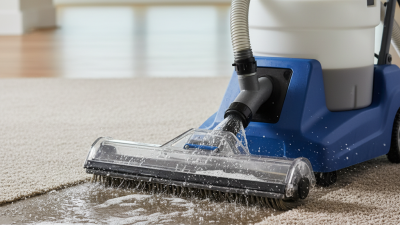
Hot-water extraction flushes soil from carpet and recovers dirty water through a vacuum head. Encapsulation uses solution and brushing to bind soil for later vacuuming, reducing drying delays when traffic cannot stop. Brush pressure, water temperature, suction, and operator speed all affect results. More power is not always better. Excess moisture can leave carpets damp for hours, especially in poorly ventilated rooms.
Grand View Research’s 2024 Commercial Cleaning Equipment Market report projects 5.8% annual growth from 2024 to 2030. The category includes equipment beyond carpet cleaners, so this is market context, not a carpet-machine forecast. The report points to broader demand for commercial cleaning equipment. Battery-powered machines and more efficient water recovery are gaining attention, while buyers still weigh runtime, maintenance, and spare-part access. One practical gap remains: published performance claims may not reflect local carpet types or daily soil loads. Testing on-site is less tidy, but often more useful.