2026 Top Ethernet Gateway Suppliers for Global Buyers
As industrial networks expand across factories, warehouses, utilities, and transport systems, Ethernet Gateway equipment has become a practical bridge between modern Ethernet and older field protocols. A gateway may sit inside a dusty DIN-rail cabinet, connecting Modbus RTU sensors, CAN devices, or serial meters with cloud-ready Ethernet infrastructure. Its value is not limited to data conversion. Reliability, cybersecurity, latency, remote management, and lifecycle support often determine the real cost of deployment.
Industry research supports this growing importance. IDC’s Worldwide Edge Spending Guide identifies connected edge infrastructure as a continuing investment priority, driven by real-time analytics and distributed operations. The Ethernet Alliance’s Ethernet Roadmap also highlights higher speeds, stronger interoperability, and expanding Ethernet use beyond traditional data centers. In parallel, MarketsandMarkets and Grand View Research report continued growth in industrial networking and edge connectivity markets, although their estimates differ by scope and methodology. Numbers deserve careful reading.
This guide, “2026 Top Ethernet Gateway Suppliers for Global Buyers,” evaluates suppliers through a practical purchasing lens. It considers protocol support, certifications, operating temperature, management software, technical documentation, and after-sales responsiveness. A low-cost gateway can appear attractive until firmware updates stop or replacement units become unavailable. That happens. Buyers should also verify performance under actual traffic, not only laboratory specifications. Supplier rankings can simplify research, but they cannot replace site testing, engineering review, and regional compliance checks. The strongest vendors combine dependable hardware with transparent support, documented compatibility, and realistic delivery commitments.
What Is an Ethernet Gateway and Why It Matters in 2026
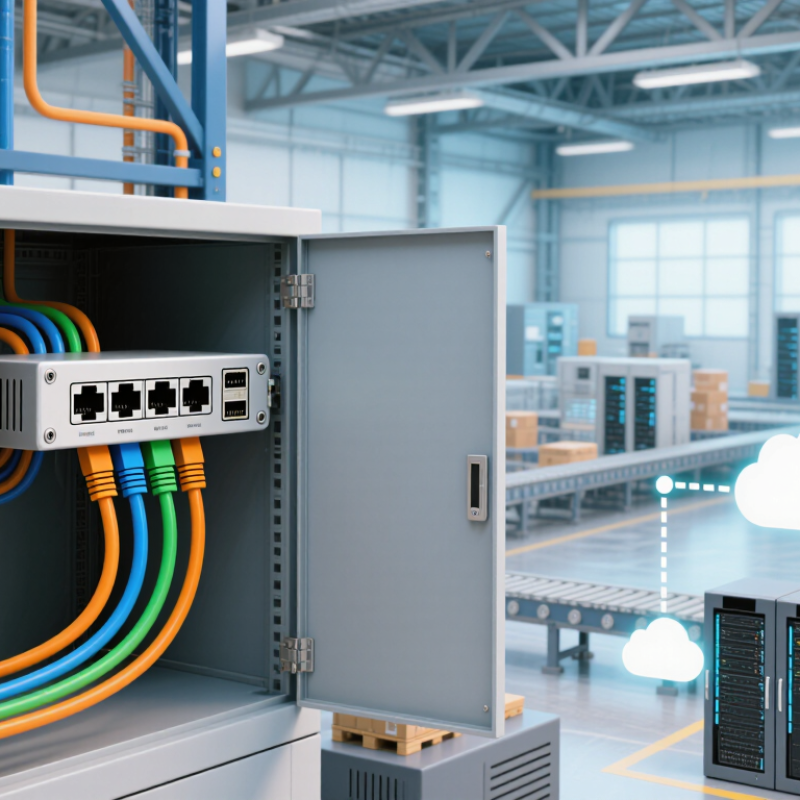
An Ethernet gateway connects local wired devices with wider networks, cloud platforms, or industrial systems. It routes traffic, translates protocols, and can separate sensitive equipment from ordinary office users. In practice, it may sit inside a factory cabinet, beside a camera rack, or behind a compact retail counter. The hardware looks simple. The decisions are not.
Its importance is growing with connected infrastructure. IoT Analytics reported about 16.7 billion connected IoT devices at the end of 2023, with roughly 18.8 billion expected in 2024. IDC also forecast global edge-computing spending above 232 billion dollars in 2024. These figures suggest more traffic will be processed near machines, vehicles, and buildings. Gateways help reduce latency, manage bandwidth, and maintain local operations when cloud access becomes unstable. Still, performance depends on configuration, not only port speed.
Global buyers should examine protocol support, redundant power, VLAN handling, firewall features, temperature tolerance, and long-term software updates. IEEE 802.3 compatibility matters, but it does not guarantee smooth integration with every legacy system. That assumption causes avoidable problems. A gateway may support gigabit Ethernet yet struggle with weak firmware, poor diagnostics, or limited remote management. Requirements should be tested with real traffic, cable lengths, environmental conditions, and failure scenarios before purchase. The cheapest unit may become the most expensive decision.
2026 Top Ethernet Gateway Suppliers for Global Buyers - What Is an Ethernet Gateway and Why It Matters in 2026
Supplier-neutral comparison of Ethernet gateway categories, capabilities, standards, and purchasing considerations
| Gateway Category | Primary Function | Common Ethernet Interfaces | Typical Protocol Support | Typical Throughput Range | Best-Fit Applications | Key Buying Criteria |
|---|---|---|---|---|---|---|
| Industrial Protocol Gateway | Connects equipment using different industrial communication protocols. | 10/100 Mbps and 1 Gbps copper Ethernet; optional fiber uplinks. | Modbus TCP, Modbus RTU, EtherNet/IP, PROFINET, OPC UA, MQTT. | 10–1,000 Mbps, depending on interfaces and processing load. | Factory automation, machine integration, utilities, and building control. | Protocol licenses, deterministic performance, DIN-rail mounting, redundancy, and lifecycle support. |
| Industrial Edge Gateway | Collects, filters, analyzes, and forwards operational data close to the machines. | Dual or multiple 1 GbE ports; some models support 2.5 GbE or 10 GbE. | OPC UA, MQTT, HTTPS, REST API, Modbus TCP, container-based applications. | 1–10 Gbps aggregate Ethernet capacity. | Predictive maintenance, computer vision, production analytics, and local AI processing. | CPU and memory capacity, container support, storage endurance, operating temperature, and remote management. |
| Secure Industrial Router | Routes traffic between industrial networks while enforcing security policies. | Multiple 1 GbE ports; SFP or fiber options are common in higher-end units. | IPv4/IPv6, VLAN, static routing, VPN, IPsec, firewall rules, NAT. | 100 Mbps–10 Gbps, depending on encryption and packet-inspection features. | OT network segmentation, remote maintenance, plant-to-plant connectivity, and critical infrastructure. | Secure boot, signed firmware, role-based access, logging, VPN performance, and security update policy. |
| Cellular Ethernet Gateway | Provides wide-area connectivity where wired broadband is unavailable or unsuitable. | 1 GbE LAN ports with 4G LTE or 5G cellular connectivity. | IP routing, VPN, MQTT, HTTPS, SMS management, dual-SIM failover. | Up to hundreds of Mbps on LTE; potentially multi-Gbps under suitable 5G conditions. | Remote sites, transport, smart utilities, temporary installations, and field equipment. | Regional band compatibility, antenna design, carrier certification, roaming, failover, and environmental rating. |
| Fiber Ethernet Gateway | Extends Ethernet over long distances and reduces exposure to electromagnetic interference. | SFP, SFP+, multimode fiber, single-mode fiber, and copper Ethernet. | Ethernet, VLAN, RSTP, ERPS, SNMP, QoS, and network management protocols. | 100 Mbps, 1 Gbps, or 10 Gbps depending on transceivers and system design. | Substations, rail systems, campuses, factories, tunnels, and geographically distributed sites. | Fiber type, optical distance, redundancy, connector availability, temperature rating, and surge protection. |
| Time-Sensitive Networking Gateway | Transports time-critical traffic with bounded latency and synchronized timing. | 1 GbE or 2.5 GbE; higher speeds may be used for backbone applications. | IEEE 802.1AS, 802.1Qbv, 802.1Qbu, 802.1CB, and compatible industrial protocols. | Typically 1–10 Gbps, with performance determined by traffic scheduling and hardware support. | Motion control, robotics, automotive production, professional media, and synchronized automation. | Supported TSN profiles, clock accuracy, latency guarantees, interoperability testing, and configuration tools. |
| Building and Energy Gateway | Integrates building, metering, HVAC, lighting, and energy-management systems. | 10/100 Mbps or 1 GbE; serial and wireless interfaces may be included. | BACnet/IP, BACnet MS/TP, Modbus TCP, Modbus RTU, KNX IP, MQTT, and HTTPS. | 10–1,000 Mbps Ethernet link speed. | Commercial buildings, campuses, data centers, renewable-energy sites, and smart facilities. | Protocol interoperability, metering accuracy, cybersecurity, commissioning tools, and long-term compatibility. |
| Managed Cloud-Connected Gateway | Provides centralized provisioning, monitoring, analytics, and software lifecycle management. | One or more 1 GbE ports; optional cellular, Wi-Fi, or fiber uplinks. | MQTT over TLS, HTTPS, REST API, VPN, device-management APIs, and secure remote access. | 100 Mbps–10 Gbps, depending on hardware and cloud-service architecture. | Large distributed deployments, fleet monitoring, remote operations, and multi-site analytics. | Data ownership, API availability, subscription terms, offline operation, identity management, and update controls. |
| 2026 Selection Priorities: Evaluate interoperability, cybersecurity, lifecycle support, environmental durability, remote management, protocol licensing, redundancy, and total cost of ownership rather than Ethernet speed alone. | ||||||
Technical values are representative ranges. Actual performance depends on interface configuration, protocol workload, encryption, network topology, environmental conditions, and applicable regional certifications.